
 (402) 431-2335

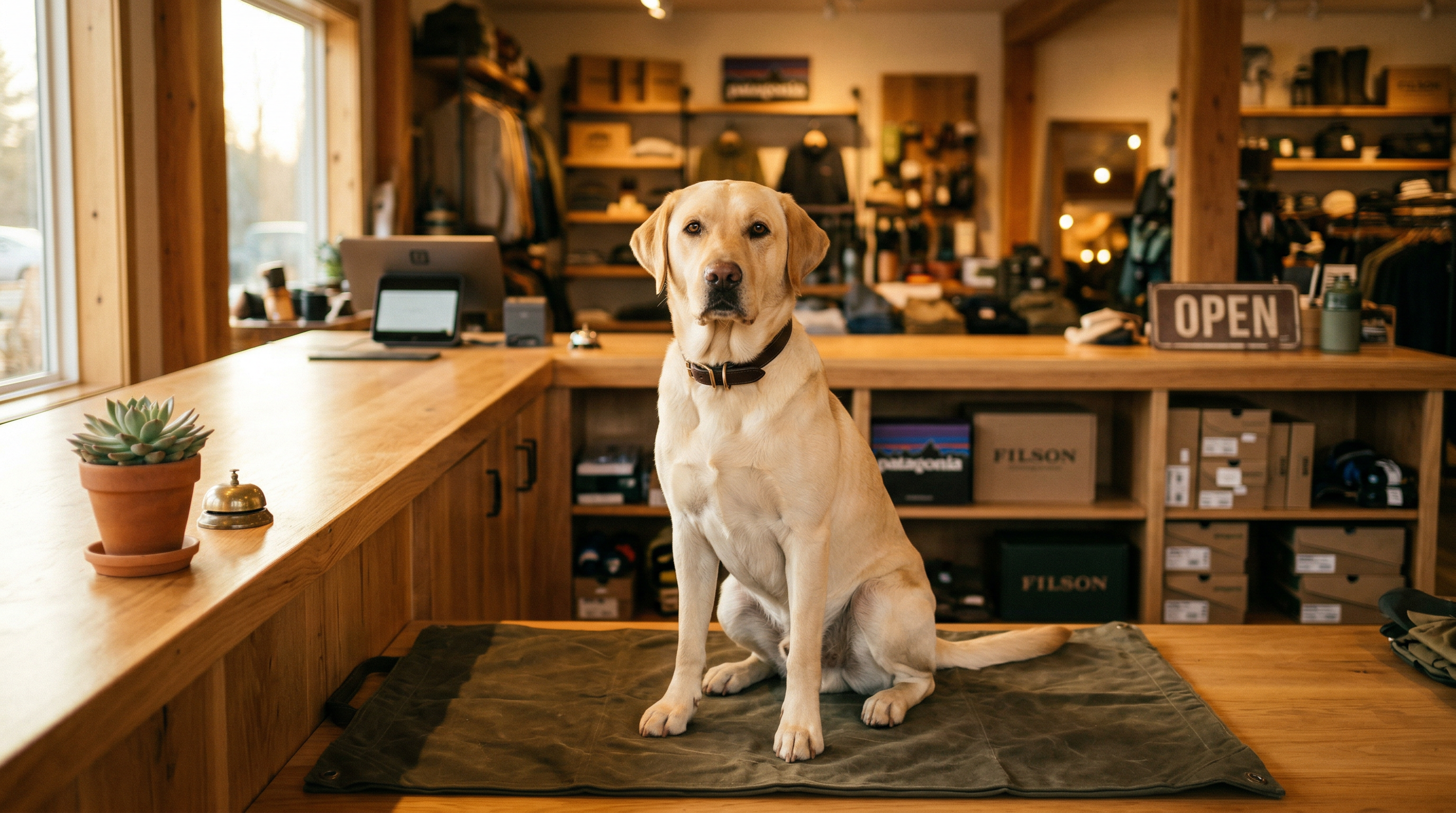
Your 14-week-old Lab just bolted across the shop floor, knocked a Glock display sideways, and peed on a customer's boot. Sound familiar?
You're not alone. We work with dozens of gun stores, ranges, and firearms ecommerce brands at Gunpowdr, and here's the pattern we see over and over: someone gets a puppy thinking "range dog" and ends up with "range liability." The funny thing? Proper puppy training for gun dog breeds is one of the most overlooked investments in this industry. The shops that actually commit a little time to training end up with one of the most powerful marketing assets money can buy. Their social engagement climbs. Customers remember them. The dog becomes the brand.
Here's what we're going to cover: a 30-day blueprint for gun dog puppy training that fits into a 15-minute daily window, keeps you out of legal trouble, and turns your pup into a four-legged brand mascot. Because training your gun dog puppy isn't just about obedience. It's one of the cheapest, highest-ROI marketing moves a firearms business can make.
Let's start with why the advice you've already Googled probably won't work.
Why Generic Puppy Training Guides Don't Cut It for Firearms Businesses
You've probably already skimmed a few "how to train your puppy" articles. And you've probably already noticed the problem: they're written for someone living in a quiet suburban house with a fenced backyard and nowhere to be. That's not your world.
The Noise Problem Is Unique to Your Environment
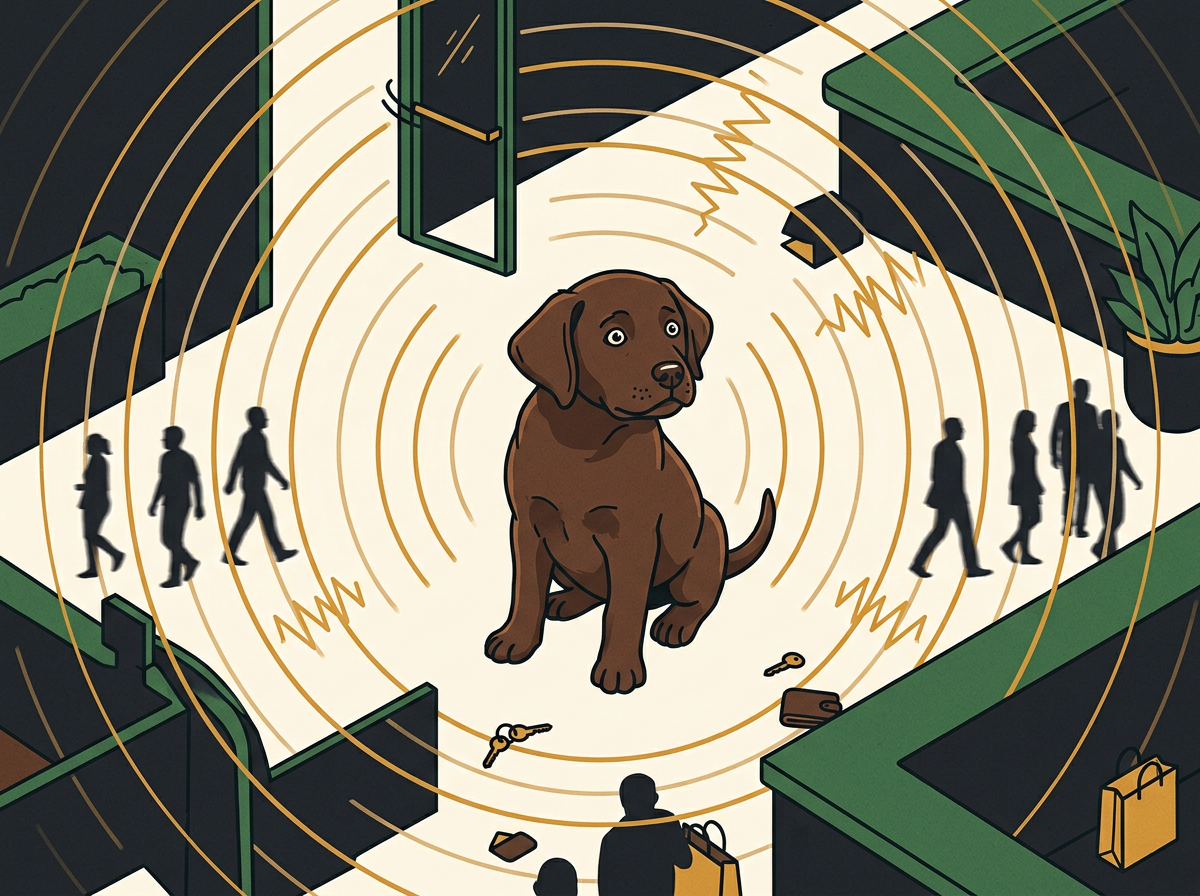
Standard guides assume your biggest distraction is a doorbell. Your puppy lives in a world of gunfire, brass hitting concrete, and sudden crowd movement. Noise desensitization is barely a footnote in mainstream puppy training content, but for gun dog puppy training, it's the entire ballgame. A pup that panics at the first shot undermines customer confidence instantly.
Customer-Facing Environments Change Everything
Most training advice targets private pet owners, not businesses where a dog interacts with dozens of strangers every single day. A jump or a nip in a gun store isn't just embarrassing. It's a legal exposure point. The AVMA reports that millions of dog bites occur in the U.S. annually, and businesses are held to a higher standard than private owners. Recall and impulse control need to be trained for the specific distractions of retail and range settings, not a calm living room.
You Don't Have Two Hours a Day
You're running inventory, managing a range, fulfilling online orders, or all three at once. You need range dog obedience training methods that work in 10 to 15 minutes, not weekend-long field retreats. And the training has to happen in your business environment, not separate from it.
The Breeds That Actually Work
Before we get into the blueprint, a quick word on breeds. Not every dog belongs in a gun store. The AKC's Sporting Group includes the breeds best suited for firearms environments:
- Labs and Goldens: Calm temperament, customer-friendly, and incredibly photogenic for your ecommerce content
- German Shorthaired Pointers: Highly trainable, great for active range environments
- Brittanys: Smaller footprint for tight retail spaces, eager to please
A brief note: avoid high-prey-drive or reactive breeds in public firearms settings. You want a dog that defaults to calm, not one you're constantly managing.
Now that you know why you need a different approach, here's the 30-day blueprint.
The 30-Day Puppy Training Blueprint for Gun Dog Breeds
This is the core of your bird dog training schedule. Four weeks. Fifteen minutes a day. Each phase builds on the last. Don't skip ahead.
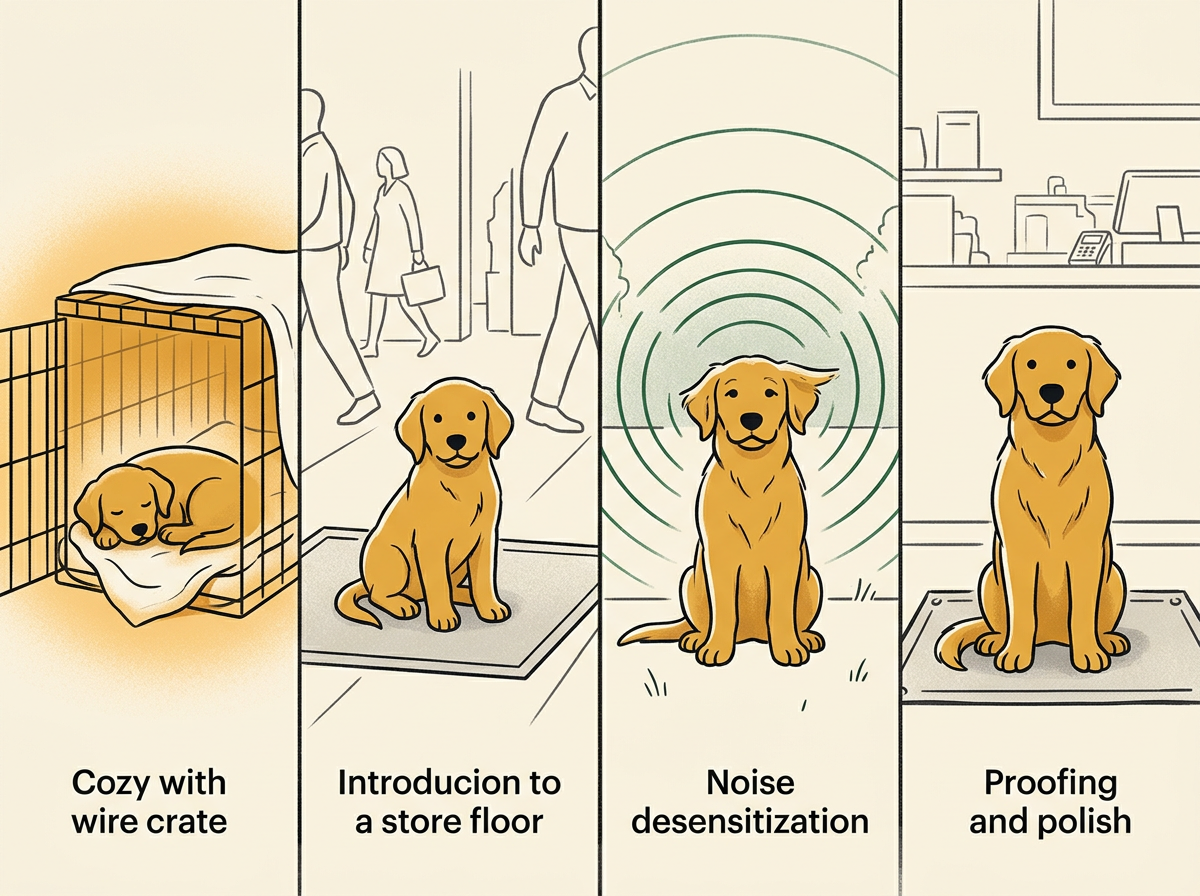
Week 1: Foundation at Home (Days 1 to 7)
Crate training is your non-negotiable base. Use a firearm-safe crate setup, positioned away from product displays, ammo storage, and high-traffic doorways. Run 5-minute sessions, three times daily. The crate equals calm, not punishment. Practical tip: feed every meal inside the crate to build a positive association fast.
Name recognition and basic recall come next. Start in a zero-distraction space before you ever introduce the store or range floor. Use high-value treats (not kibble, think real chicken or freeze-dried liver). Your goal by Day 7: your pup looks at you within 2 seconds of hearing their name, 8 out of 10 times.
Housebreaking on a business schedule requires the tether method. Your puppy stays on a leash attached to you or a fixed point during business hours. No unsupervised roaming. Take them out every 90 minutes and immediately after crate time. Mark every outdoor success with a treat and a consistent word. ("Good business." Yes, really.)
Week 2: Store Floor Introduction (Days 8 to 14)
Controlled exposure to foot traffic is where it starts getting real. Keep your pup leashed, on a mat behind the counter. Not free-roaming. Reward calm behavior when customers enter. If your pup gets overstimulated, remove them. Start with 15 minutes on the floor, then back to the crate. Build duration gradually.
"Leave it" and impulse control are critical for a dog surrounded by merchandise, dropped brass, and customer gear. Start with treats on the floor under your foot. Reward the moment your pup disengages and looks away. Advance to ignoring items on low shelves by Day 14.
Handling by strangers needs to be practiced deliberately. Ask trusted regulars to practice calm greetings (no face-licking rodeos). Enforce the four-on-the-floor rule: your pup only gets attention when all four paws are on the ground. This directly prevents the jump-and-nip scenarios that create liability nightmares.
Week 3: Noise Desensitization (Days 15 to 21)
This is the phase that separates a gun dog from a pet dog. It's also where most people mess up by going too fast.
Gradual gunfire introduction starts with recorded gunshot sounds at low volume during meal times. Increase volume 10 to 15% daily, but only as long as your pup eats without hesitation. By Day 18, introduce real (distant) range fire with your pup on a leash, paired with treats. Your Day 21 goal: pup remains relaxed at moderate gunfire within 50 yards.
Layer in environmental sounds alongside the gunfire work. Brass cleanup, steel targets ringing, door buzzers, cash registers. Each new sound gets paired with food or play. If your pup freezes or cowers, reduce intensity and slow down. Pushing too fast creates permanent fear responses. This is not the place to "tough it out."
Week 4: Proofing and Polish (Days 22 to 30)
Recall under real distractions is your first priority. Practice recall on a long line in the store and on range property. Add distractions incrementally: other people, loud noises, thrown objects (simulating dummy retrieves). Your goal is reliable recall 9 out of 10 times in a moderately busy environment.
The "place" command is essential for range days. "Place" means go to your mat or bed and stay until released. This is the command you'll use during range sessions, customer meetings, and photo shoots. Build to 15-minute holds by Day 30.
Run a public-ready behavior audit before you declare victory. Can a child approach safely? Can the pup hold a "place" during a transaction? Does the pup recover quickly from a nearby shot? If any answer is no, extend that specific phase. Don't rush to show off.
You've got a trained pup. Now let's talk about why that matters way beyond "nice to have."
Your Trained Pup Is a Marketing Machine
Here's where it gets interesting. That retriever puppy training effort you just invested in? It's about to pay for itself many times over.
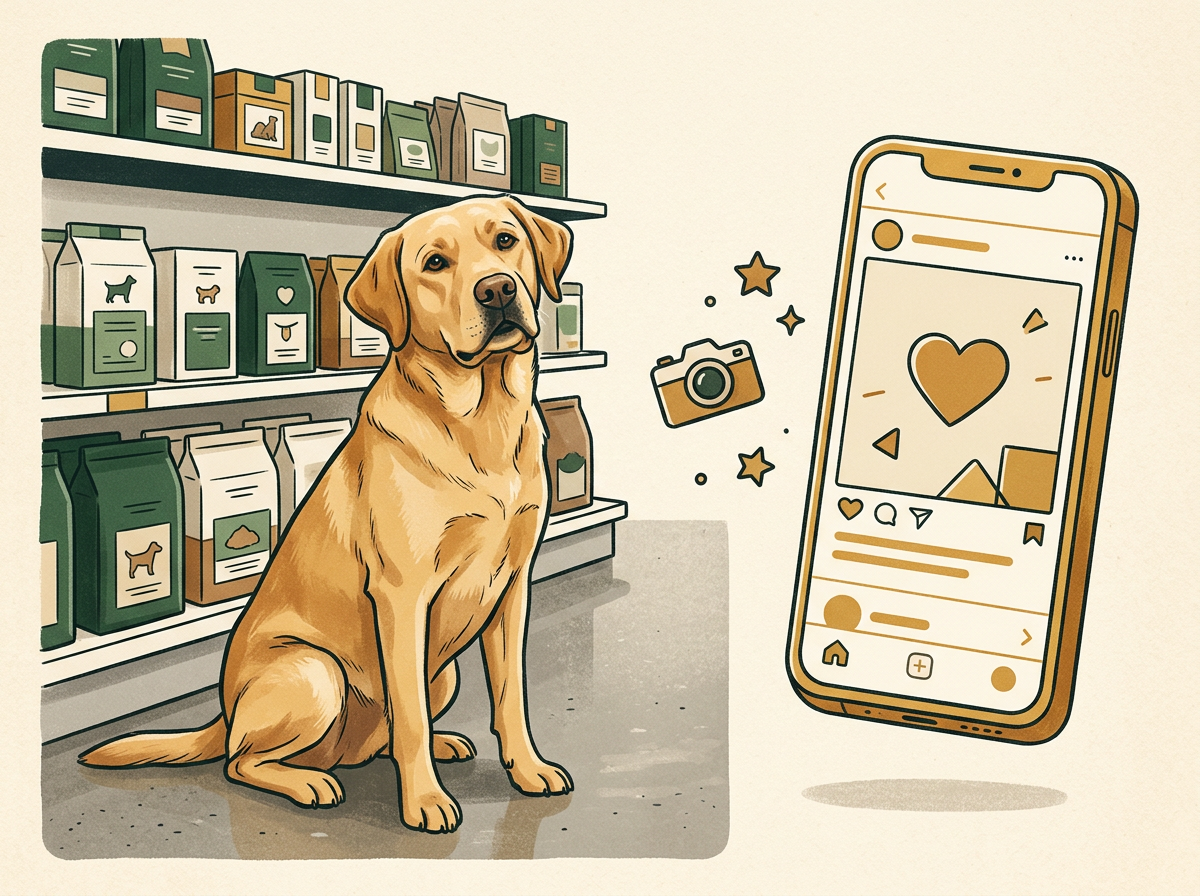
Social media is a content goldmine. Gun enthusiasts on Instagram and TikTok engage 2 to 3 times more with dog content than product-only posts. A well-behaved range dog in your ecommerce product photos adds personality that competitors simply can't replicate. Think "dog of the day" series, your pup posing with new arrivals, behind-the-scenes range training clips. Trained pup content can boost social engagement 20 to 30% for firearms brands. That's not a guess. That's what we see at Gunpowdr across the brands we work with.
In-store, a calm shop dog is an experience differentiator. Your dog makes your store memorable. Customers come back partly for the dog, and they tell their friends about it. A range mascot creates word-of-mouth that no ad budget can buy. The brands that build personality into their marketing consistently win customer loyalty in this niche.
And here's the "before and after" content play. Document the 30-day training journey and publish it. It's ready-made content that shows your brand's personality without trying too hard. Progress videos, milestone photos, bloopers. All high-engagement formats. This single puppy training process can generate 30 or more pieces of social content. That's a month of posts from something you were already doing. If you want to amplify that content even further, a solid SEO strategy for firearms ecommerce turns those posts into long-term organic traffic.
But before you dive in, let's cover the mistakes that can undo all this work, including the one that could actually get you sued.
Liability-Proof Basics: Common Mistakes in Early Gun Dog Puppy Training
Let's get direct. These aren't hypotheticals. These are the common mistakes in early gun dog puppy training that we've seen cause real problems.
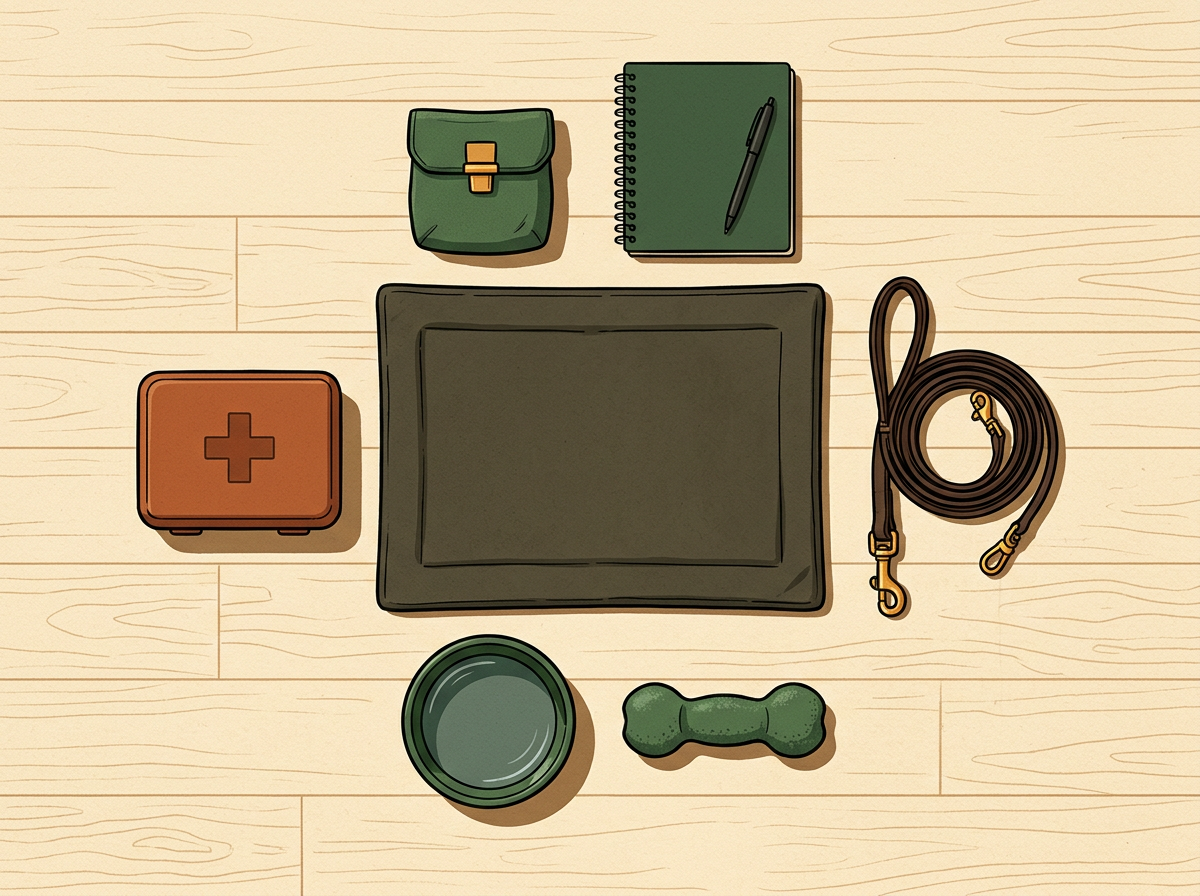
Never let an untrained puppy free-roam during business hours. Tether or crate. No exceptions until the 30-day blueprint is complete. One knocked-over display or one startled customer holding a firearm is a catastrophic scenario. Insurance tip: check your business liability policy for animal exclusions before bringing a dog on-premises. The NSSF's safety resources are a good starting point for understanding industry-standard safety protocols.
Skipping noise desensitization creates a dangerous dog. A gun-shy dog that bolts is a projectile in a room full of firearms. Flooding (exposing a pup to full gunfire immediately) doesn't toughen them up. It creates panic and aggression. Always follow the gradual protocol from Week 3. No shortcuts.
Ignoring bite inhibition and mouthing in puppyhood is a lawsuit waiting to happen. Puppies mouth everything. It's normal. But in a customer-facing gun business, it's unacceptable. Redirect every mouth contact to a toy, immediately and consistently. Any pup that shows resource guarding (growling over food, toys, or space) needs professional evaluation before being in a public setting. Period.
Document your training for legal protection. Keep a simple log: dates, skills trained, milestones hit. If an incident ever occurs, documented training history demonstrates due diligence. This takes 2 minutes a day and could save your business.
Conclusion
Four weeks, 15 minutes a day, one range-ready dog that pays for itself in brand value. That's the whole puppy training for gun dog breeds formula.
You get three wins from this process. First, operational calm: no more chaos on the store floor. Second, legal protection: documented, trained behavior that demonstrates due diligence. Third, marketing ROI: a content machine on four legs that boosts engagement and makes your brand unforgettable.
Real talk: it takes consistency, not perfection. Miss a day? Pick it back up and stick to the timeline. Your pup won't hold it against you.
You already run a firearms business. Training a puppy is the easy part.
Your pup's ready to work. Is your marketing? Gunpowdr helps firearms businesses turn brand personality into real revenue. Whether it's your shop dog, your social presence, or your entire content strategy, we'll build a system that drives traffic and sales. Book a free strategy call and let's talk.
Want the condensed version? Download our free printable 30-Day Range-Ready Puppy Checklist so you can pin it to the wall and track every milestone.