 (402) 431-2335


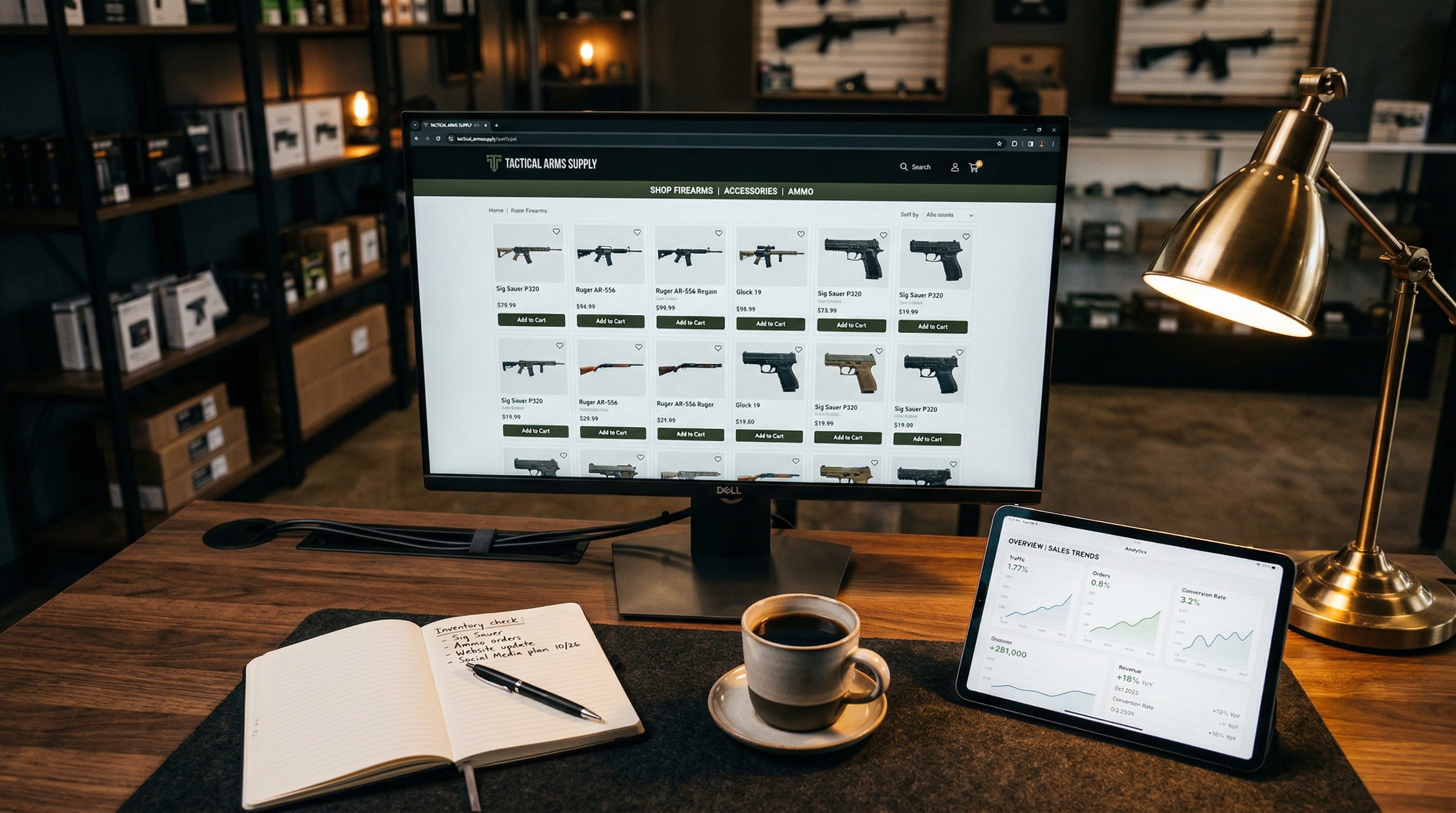
Most ecommerce brands split their marketing budget between paid ads and organic search. Firearms retailers don't get that option. Meta, Google Shopping, and most display networks restrict firearms advertising, which makes SEO the primary revenue channel for firearms ecommerce stores.
Here's what makes that a good thing: SEO compounds. Every piece of content you publish, every technical fix you ship, and every backlink you earn builds on itself. Month 12 looks nothing like month 3. These five strategies will help you make the most of that momentum.
1. Optimize Product Pages for Buyer-Intent Keywords

Your product pages are your highest-converting assets, yet most firearms retailers treat them as simple catalog listings. That gap is your opportunity.
Every product page should include:
- Unique descriptions that go beyond manufacturer copy. Every retailer using the same Glock description is competing for the same scraps. Write your own.
- Specification tables with structured data markup. Google uses this to display price, availability, and ratings directly in search results, which drives higher click-through rates.
- Comparison context that helps buyers decide. "How does this compare to the M&P Shield?" is a question your product page should answer before the shopper leaves to find out.
- User-generated content like reviews and Q&A sections. Fresh content signals relevance to search engines, and real buyer language naturally includes the long-tail keywords you want to rank for.
Don't overlook your category pages either. Most firearms stores have category pages for handguns, rifles, shotguns, and ammunition that are thin on content. Adding 200-300 words of unique copy to each category page, covering what you carry, who it's for, and how to choose, turns dead-end pages into ranking assets. These pages often have the highest commercial intent of anything on your site.
2. Build SEO Topical Authority with Content Clusters

Google rewards websites that demonstrate deep expertise in a specific subject. Random blog posts don't build that kind of trust. Organized content clusters do, and sites that implement them correctly see significantly more organic traffic than those relying on standalone articles.
So how do you build one? Pick your core topics based on what you sell. If you specialize in AR-15 builds, your cluster might include:
- A pillar page on AR-15 platform overview
- Supporting content on upper receivers, lower receivers, barrel lengths, gas systems, and optics
- Buying guides for different use cases (home defense, competition, hunting)
- Comparison content between popular configurations
Each piece links to related content within the cluster. This internal linking structure tells Google you're a comprehensive resource, not just another retailer with a blog.
The key is consistency. Publishing one article per month within a cluster is more effective than publishing ten random posts. A focused content calendar built around three or four core clusters will outperform a scattered approach every time. And every new piece of content strengthens the pages that came before it, because each internal link passes authority throughout the cluster.
3. Fix Technical SEO Before Chasing Content

None of the strategies above will work if your technical foundation is broken. Before publishing a single blog post, audit these fundamentals:
- Site speed. WooCommerce stores with large catalogs need proper caching, image optimization, and CDN configuration. Pages that load in under two seconds convert at significantly higher rates than slower pages, and anything past four seconds loses the majority of shoppers entirely.
- Mobile experience. Mobile devices now account for roughly 75% of ecommerce site traffic. Your store needs to be built for mobile from the start and function smoothly on every screen size.
- Crawl efficiency. Large catalogs create crawl budget problems. Use proper pagination, canonical tags, and XML sitemaps to help Google find your important pages first.
- Index management. Filter pages, empty categories, and out-of-stock products can dilute your site's authority. Use noindex tags strategically to keep Google focused on pages that drive revenue.
- Core Web Vitals. Google uses these metrics as a ranking tiebreaker. When two pages have similar content quality, the one with better load times, visual stability, and responsiveness wins. For ecommerce stores in competitive niches, that gap can mean the difference between page one and page two.
If you also operate a physical storefront, don't ignore local SEO. Claiming and optimizing your Google Business Profile helps you show up in local pack results when someone searches "gun store near me" or "FFL dealer" in your area. Add accurate hours, photos of your shop, and respond to every review. These local signals also strengthen your domain authority for your ecommerce pages.
4. Earn Backlinks Through Industry Partnerships
Backlinks remain one of the strongest ranking factors. The challenge for firearms brands is that traditional link building tactics like guest posts and resource pages are harder to execute. Many publishers won't link to firearms content.
That doesn't mean link building is off the table. Focus on what actually works in this industry:
- Industry publications. Firearms-specific media like RECOIL, The Firearm Blog, and Guns & Ammo actively look for expert sources and product data.
- Manufacturer relationships. If you're an authorized dealer, ask manufacturers to link to your store from their dealer locator pages. These are high-authority, relevant backlinks.
- Local SEO. Chamber of commerce listings, local business directories, and regional firearms associations provide authoritative links that also drive local traffic.
- Original data and research. Unique insights about the firearms market get cited. Industry reports, survey results, and trend analysis attract links from publishers who need sources.
- Sponsorships and events. Local shooting competitions, training courses, and industry events often have websites that link to sponsors. These are relevant, natural backlinks that also put your brand in front of buyers.
One approach that's often overlooked: create linkable assets on your own site. A well-researched buyer's guide, an interactive caliber comparison tool, or a state-by-state shipping regulations page gives other sites a reason to link to you. These pages earn links passively over time, which means your backlink profile grows without constant outreach.
5. Track Revenue from Organic Search, Not Vanity Metrics

Traffic numbers alone mean nothing. A blog post with 10,000 visits and zero sales is not an SEO win. Revenue attribution separates useful metrics from vanity metrics. Focus your reporting on these:
- Revenue from organic search. This is the number that justifies your SEO investment. Set up proper ecommerce tracking in GA4 so you can tie transactions back to the pages and keywords that drove them.
- Keyword rankings for commercial terms. "Buy Glock 19" matters more than "Glock 19 history." Prioritize the keywords that signal purchase intent.
- Page-level conversion rates. Which product pages and content pages actually drive sales? Double down on what works and improve or consolidate what doesn't.
- Click-through rates from search. If you're ranking on page one but not getting clicks, your title tags and meta descriptions need attention. Small changes here can move the needle fast.
Set up a monthly reporting cadence and review these metrics together, not in isolation. A page with high traffic but low conversions might need a better product layout or stronger calls to action. A page with strong conversions but low traffic is a candidate for more backlinks or content expansion. The data tells you where to invest your time next, but only if you're tracking the right numbers.
Where to Start with Your Firearms Ecommerce SEO Strategy
You don't need to tackle all five strategies at once. Start with the technical foundation: fix your site speed and mobile experience. Then optimize your highest-traffic product pages with unique descriptions and structured data. Once those are performing, build content clusters around your best-selling categories.
The results compound from there. SEO is not a quick fix, but for firearms ecommerce brands with limited advertising options, it remains the most reliable and scalable growth channel available. Start building now, and month 12 will prove the investment was worth it. If you need help getting started, we can audit your store and build a plan.